
Printable Educational Worksheets for Teachers: 2026 Guide
Last Updated: October 23, 2026
Quick Summary
Printable educational worksheets for teachers are downloadable, no-login resources you print and hand out for focused skill practice, and they work offline when devices or Wi-Fi fail. Choose sheets that target one skill, match your grade level, and state clear classroom-use licensing terms before you copy.
- A strong worksheet targets one skill and quickly shows you who understood it.
- Skip sheets with 40 near-identical problems; ten well-chosen problems tell you more.
- Print one copy and work through it yourself before assigning it to students.
- Check licensing terms before copying, since free downloads often limit sharing and digital use.
- Print two versions of the same skill, one with scaffolding and one without.
Table of Contents
- Why Printable Worksheets Still Earn Their Place in 2026 Classrooms
- Printable Worksheets by Subject: Math, Reading, Writing, Science, and Social Studies
- Teacher Worksheets by Grade Level: Preschool Through Fifth Grade
- Free Printable Worksheets for Teachers: Where to Look and What to Expect
- Free Teacher Resources and Printables Beyond the Worksheet
- What to Check Before You Print: Licensing, Accessibility, and Standards
- Conclusion
- Frequently Asked Questions
Why Printable Worksheets Still Earn Their Place in 2026 Classrooms
At The Digital Bookshelf Store, we hear the same thing from teachers again and again: the budget is thin, the planning time is thinner, and anything that adds another app to manage gets abandoned by October.
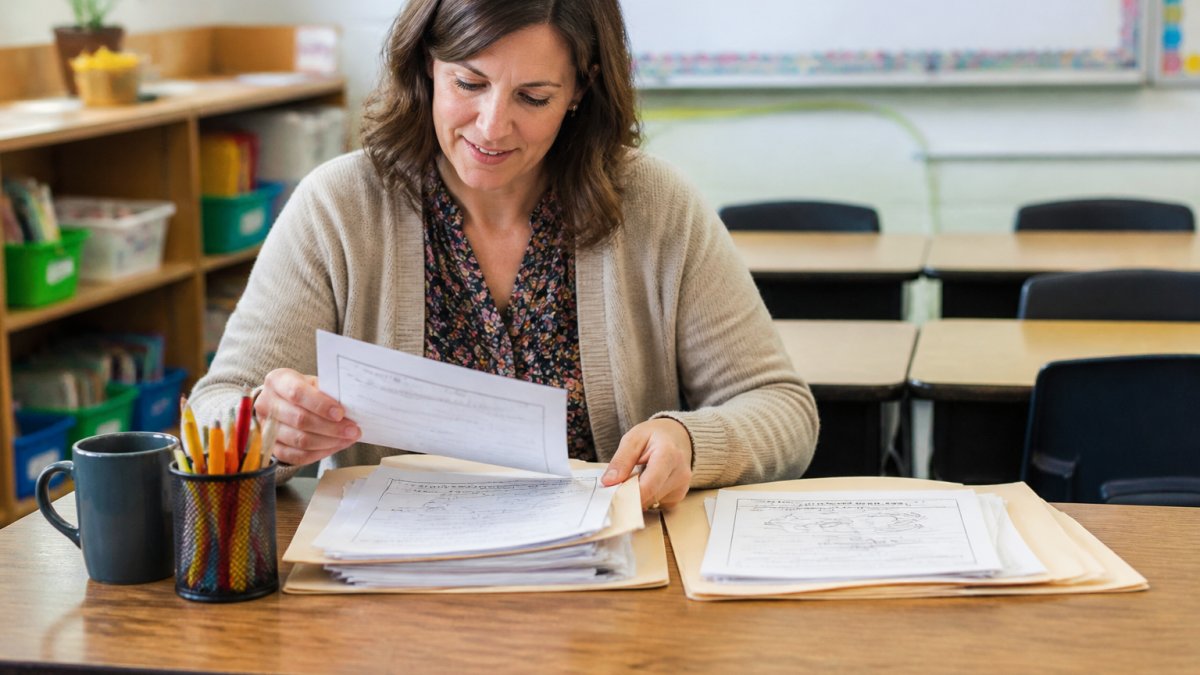
That's why paper still wins in many rooms. A worksheet is instant. You download it, print it, and hand it out.
The case for printables comes down to a few simple points:
- They work offline and on paper, so no device is required
- They give quiet, independent practice while you run small groups
- They're easy to differentiate by handing out different versions
Many teachers find that a well-chosen worksheet does more for retention than a flashy game. The catch is quality.
Below, we'll walk through the subjects, grade levels, and free sources worth your time, plus the licensing and accessibility checks most guides skip.
Printable Worksheets by Subject: Math, Reading, Writing, Science, and Social Studies
Printable worksheets by subject let you fill a specific gap fast. When a small group needs extra practice on one skill, you reach for a targeted sheet, not a full unit.
A common mistake is grabbing a general "review" packet. Those cover too much and drill too little. Match the sheet to the exact skill you taught that day.
Math and Early Numeracy
Math worksheets work best when they build in small steps. For early learners, that means counting, number tracing, and simple addition with pictures.
For older students, look for word problems that ask them to show their work. A good math sheet has a clear example at the top, a handful of guided problems, then a few independent ones.
Skip any sheet that's 40 near-identical problems. Ten well-chosen problems tell you more than forty repetitive ones, and they save paper.
Reading, Phonics, and Comprehension
Reading practice splits into three jobs: phonics, fluency, and comprehension. Keep them separate on paper.
- Phonics: letter sounds, blends, and word families
- Sight words: quick recognition drills
- Comprehension: short passages with a few questions
For comprehension, choose passages with questions that ask students to find evidence in the text. That one habit builds stronger readers than a page of circling answers.
Teacher Worksheets by Grade Level: Preschool Through Fifth Grade
Teacher worksheets by grade level save you from guessing whether a sheet fits. A preschool sheet and a fifth-grade sheet can look similar at a glance, but the reading level and task demand are worlds apart.
Here's how the needs shift as students move up:
| Grade Level | Focus Areas | What to Look For |
|---|---|---|
| Preschool | Tracing, colors, counting to 10 | Large print, picture cues |
| Kindergarten | Letter sounds, sight words, numbers | Simple directions, one skill per page |
| Grades 1-2 | Phonics, addition, sentence writing | Word banks, clear examples |
| Grades 3-4 | Comprehension, multiplication, paragraphs | Multi-step tasks, space to show work |
| Grade 5 | Fractions, essay structure, science | Higher-order questions, less scaffolding |
A common mistake is printing a grade level up "to challenge" a student. That usually backfires. It builds frustration, not skill. Move up only when the current level feels easy.
Free Printable Worksheets for Teachers: Where to Look and What to Expect
Free printable worksheets for teachers are everywhere, and that's the problem. Quality varies wildly, and a pretty design often hides thin content. Most guides just list sites.
Here's a side-by-side comparison of the main free worksheet sources teachers use:
| Source Type | Subject Coverage | Grade Range | Cost | Account Required? | Licensing Clarity | Standout Feature |
|---|---|---|---|---|---|---|
| Teacher marketplaces (e.g., Teachers Pay Teachers free filter) | Broad, all subjects | PreK-12 | Free and paid mixed | Yes, to download | Varies by seller; check each listing | Huge selection, teacher-created |
| Publisher freebies (e.g., Scholastic, Evan-Moor samples) | Narrow but deep | PreK-8 | Free samples | Sometimes | Usually clear classroom-use terms | Professionally edited, answer keys included |
| School and district libraries | Aligned to local scope and sequence | PreK-12 | Free to staff | Yes, district login | District-controlled | Standards alignment built in |
| Educational nonprofits (e.g., ReadWorks, Khan Academy printables) | Reading and math focus | K-12 | Free | Yes, free account | Generally permissive for classroom use | Research-backed reading passages |
| Museum and government pages (e.g., Library of Congress, NASA) | Science and social studies | K-12 | Free | Rarely | Public domain or clearly stated | Primary sources and real-world data |
| The Digital Bookshelf Store | Coloring, planners, early learning | PreK-5 | Paid downloads | No account needed | Stated at purchase |
A few patterns worth knowing before you commit planning time:
- Marketplaces trade quality control for volume. You'll find excellent sheets next to weak ones, so preview every page before you print 30 copies. Filter by rating and read the licensing tab on each listing.
- Publisher freebies are small but reliable. A sample pack from a major publisher usually includes an answer key and a clear grade-level tag, which makes them good for sub plans.
- Government and museum pages are underused for science and social studies. The Library of Congress classroom materials and NASA education resources offer primary sources and real data that glossy worksheets rarely match.
What most guides miss: free doesn't mean unrestricted. Many "free" downloads come with limits on copying, sharing, or digital distribution. Before you run 30 copies, check whether the license covers your classroom only, your whole grade level, or a paid tutoring setting.
Free Teacher Resources and Printables Beyond the Worksheet
Free teacher resources and printables stretch well past drill sheets. The best classrooms mix in tools that make learning hands-on and give you back planning time.
Worth downloading and keeping in a folder:
- Graphic organizers for reading, writing, and planning
- Task cards for centers and small-group work
- Exit tickets for a two-minute end-of-lesson check
That last one matters more than people admit. A quiet coloring page can reset a room after recess or settle students before a test.
At The Digital Bookshelf Store, our printable coloring books and mandala art fit neatly into those calm-down moments.
What to Check Before You Print: Licensing, Accessibility, and Standards
Before you hit print, run four quick checks. They protect you legally, help every student access the work, make sure the sheet matches what you're teaching, and catch quality problems before they reach students.
Licensing and Classroom-Use Permissions
Licensing is the step teachers skip, and it's the one that can cause trouble. A download isn't automatically yours to copy for the whole school.
Ask these questions before you print:
- Can I print for my own classroom only, or the whole grade?
- Can I share the file with a colleague or post it online?
- Can I use it in a paid tutoring setting?
When in doubt, copyright guidance for educators from the U.S. Copyright Office is the place to check. A simple rule: buy from sellers who state their terms clearly and let you print for your own students.
Standards Alignment and Learning Objectives
A worksheet is only useful if it matches the skill you're teaching. Before you print, identify the standard or objective the sheet addresses. Many district libraries and some nonprofit sites tag worksheets to standards (e.g., Common Core, NGSS, state standards), which saves you the mapping work.
If a sheet isn't tagged, do a quick match yourself:
- Write the objective in one sentence (e.g., "Students will identify the main idea of a short passage.").
- Check whether the worksheet's tasks actually require that skill or just adjacent ones.
- Confirm the answer key reflects the same objective, not a different interpretation.
A common pattern is a worksheet labeled "main idea" that mostly asks recall questions. Those don't build the skill. Match the task to the verb in your objective.
Accessibility and Differentiated Instruction
Accessibility means every student can use the sheet, not just the ones who read easily. A few small changes go a long way.
- Use large, clear fonts and plenty of white space
- Pair text with picture cues for early readers
- Offer a word bank for writing tasks
Differentiated instruction on paper is easier than it sounds. Print two versions of the same skill, one with scaffolding and one without. Same lesson, different entry point. For multilingual learners, pair the worksheet with a visual glossary or allow oral responses to the same questions.
Quality and Accuracy Evaluation
Before you assign a worksheet, run a two-minute quality check. It saves you from grading wrong answers and from handing out busywork.
- Answer key: Does it exist, and is it correct? Work through two or three problems yourself.
- Age appropriateness: Is the reading level and topic matched to your grade? Check sentence length and vocabulary.
- Instructional value: Does every item target the stated skill, or is half the page filler?
A worksheet that fails two or more of these checks isn't worth the paper. Skip it and find a better one.
Conclusion
The real challenge isn't finding printable worksheets. It's finding ones that fit your grade, your skill target, and your budget, without drowning in low-quality downloads.
That's where The Digital Bookshelf Store can help. We offer printable educational materials for teachers and homeschoolers, alongside creative coloring books and simple planners, all as easy digital downloads.
Get started with The Digital Bookshelf Store and put a calm, ready-to-print resource in your hands today.
Frequently Asked Questions
Where can teachers get free printable worksheets?
Free printable worksheets for teachers come from several places: publisher sample pages, teacher-created marketplaces that offer free downloads, school district resource banks, and independent shops that release free teacher resources and printables alongside paid collections. Start with one trusted source per subject so quality stays consistent, then expand. Always check the license before you photocopy for a full class, since free downloads often limit use to a single classroom or family.
How do I find worksheets by subject and grade level quickly?
Search by the skill first, then filter by grade. For example, look for phonics activities or sight words practice rather than a generic 'reading worksheet,' then confirm the grade band on the product page. Printable worksheets by subject are easiest to browse when a shop organizes its catalog into math, reading, writing, science, and social studies sections. Teacher worksheets by grade level should state the grade range clearly, so you avoid printing a page that is too easy or too advanced for your group.
What should teachers look for in a printable worksheet?
Check four things: a clear learning objective, readable print quality at standard paper size, an answer key, and a license that covers classroom copying. Look at a preview or sample page before buying, since layout and font size matter for younger students. A good worksheet also fits your lesson plan without extra prep, so printables with simple instructions save the most time. If the listing does not show a sample, ask the seller for one.
Are printable worksheets useful for classroom learning?
Yes, when they support a lesson rather than replace it. Printable worksheets work well for independent practice, centers, homework, and quick assessment, and they give students fine-motor practice that screens do not. The key is matching the worksheet to the objective and mixing formats: task cards, graphic organizers, puzzles, and educational games keep practice engaging. Pair print-ready pages with discussion or hands-on work so students apply what they practice on paper.
